It’s Game Day ladies and gentleman, and today I will be reviewing Starfield. I’ll be giving you an idea of whether it’s still worth playing in 2026. Whether it’s worth the price, and whether Bethesda hit the mark with this ambitious game. For fans of previous Bethesda games, this release came with surprise and anticipation. The creators of the Elder Scrolls & Fallout series have largely stuck to these series, so it was a pleasant surprise to see a new series, with a new setting to explore.
Starfield is not just another open-world game dressed up with spaceships. It captures the familiar DNA of other Bethesda RPGs. It does not always succeed in every area, but when it does, the payoff is great.
So let’s explore.
A Universe Built for Isolation and Wonder
From the moment you leave the mining outpost at the start and step into the wider Settled Systems, Starfield shows its intentions clearly. This is a universe meant to feel vast, indifferent, and ancient. You are not a chosen hero dropped into a neatly curated fantasy land. You are one small traveller moving through a galaxy that neither knows nor cares that you exist.
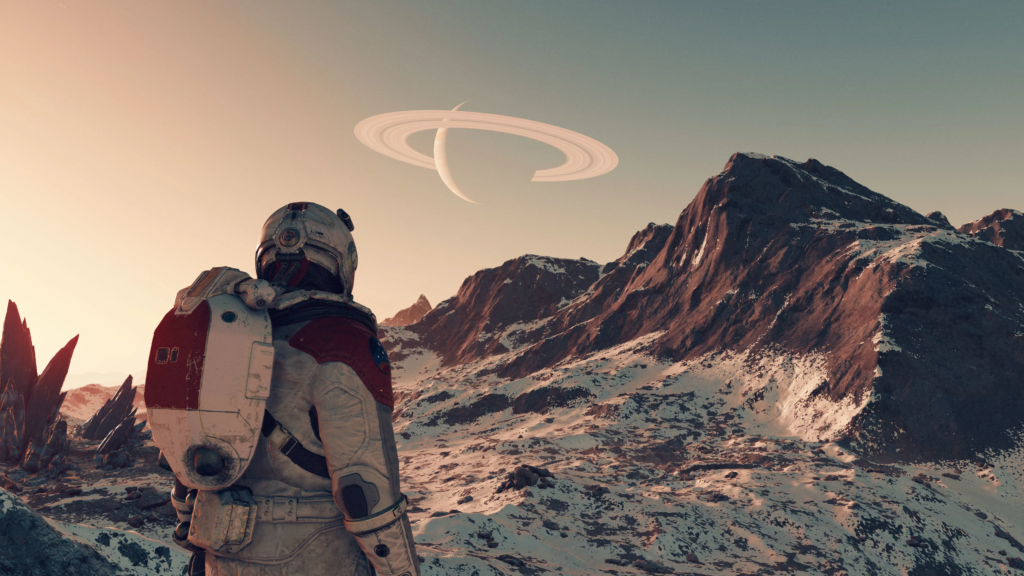
Planets vary wildly in tone and design. Some are barren ice worlds, others glow with bioluminescent plants and strange gravity-defying ecosystems. While not every planet is handcrafted at the micro level, the procedural landscapes often deliver a sense of authenticity that suits the exploratory theme. Space here feels uncomfortable, mysterious, and eerily beautiful.
What Bethesda does well with this game is the minutiae. When you explore an outpost, there’s a story within. This was always the joy of Bethesda games. Whereas previously in games such as Skyrim or Fallout 4, you’d be looking at a landscape, see a landmark such as a statue or a seaship on top of a skyscraper, you would go to explore it. In Starfield, you do the same, and whilst the somewhat randomly generated features of planets have this, they don’t quite hit the same as the previous games. I think that’s due to the random nature. It’s not that there isn’t the same joy in exploring, I think it’s just that the depth isn’t quite there, which is to be expected in a game as wide and expansive as this compared to previous games.
Gameplay That Blends the Familiar with the Unexpected
Fans of Fallout and The Elder Scrolls will instantly recognize the foundations of Starfield. There is looting, skill progression, dialogue trees, faction choices, and a flexible approach to quest-solving. The familiar Bethesda gameplay loop of explore, engage, upgrade, repeat is present and polished.
Where Starfield differs is the integration of space travel, ship management, gravity mechanics, and zero-g combat. Dogfights between ships are surprisingly tactical, especially as you upgrade your vessel’s thrusters, shields, and weapons. Boarding an enemy ship in zero gravity is one of the most exhilarating and terrifying experiences this game has to offer. The way bullets drift and enemies float when gravity is disabled is not just visually stunning, it changes the way you think and move.
Shipbuilding adds a whole new aspect as it you’re like me you’ll spend hours trying to make a new and awesome ship. And then you see the community creations which are just fantastic, I’d encourate you to find some of the designs. Whilst it’s fun to curate your ship and create your own home in space, my only complaint would be that you don’t get to use them as much as you would in a game like No Man’s Sky. Which I think is a bit of a shame.
The shooting mechanics feel tighter and more refined than previous Bethesda titles. It’s less clunky than Fallout, probably for thematic reasons as well as technical. Movement is smoother, cover is more fluid, and weapon variety offers meaningful differences. The different styles of playing make it thoroughly enjoyable, and the gunfights are epic when they hit a large scale. Laser blasts, bullets, grendades exploding with fire or lightning blasts. people charging with giant swords. When it kicks off, it really kicks off.
Storytelling That Asks Big Questions
The main narrative of Starfield revolves around mysterious artefacts connected to the origins of humanity in the universe. On the surface, it may seem like a typical sci-fi hook, but it quickly grows into a thoughtful exploration of identity, purpose, and existential curiosity.
Joining Constellation, the faction dedicated to understanding the unknown, feels symbolic of the player’s own journey. It is a story not just about what is out there, but why we feel compelled to look up at the stars in the first place.
Side quests are where this game thrives. The main plot wasn’t necessarily my favourite story in the game. I’d say the same with Skyrim and Fallout 4. For me, the joy of Bethesda games is the side quests. I would encourage any player to play a couple of the main quest missions and then get stuck into the side quests. Political struggles between space-faring factions, corporate greed on industrial planets, and personal tragedies in remote colonies all feel grounded and believable. These narratives often linger long after the mission ends. They give the universe weight and make your actions feel significant.
Visual Design and Immersion
Visually, Starfield shines in subtle ways. It does not rely on nonstop spectacle. Distant suns flare realistically across cockpit glass. Planets hang in the sky like silent gods. Dust storms crawl over barren terrain with a haunting beauty.
On powerful hardware, the game becomes even more immersive. Especially on systems equipped with modern GPUs, Starfield’s lighting and textures add layers of realism to space and surface environments. Players interested in how their hardware enhances the experience can explore more through NVIDIA, a major contributor to next-gen graphical technology in gaming.
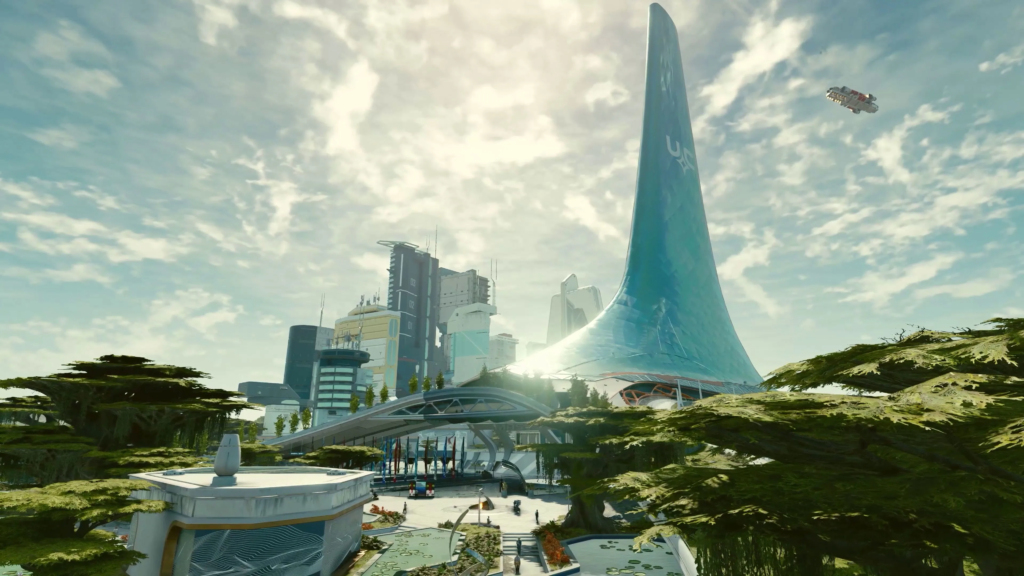
Performance can vary depending on system specs and settings, but the relentless detail in environment design is impossible to ignore. Every scratched metal surface, every control panel, every alien rock formation tells a visual story.
Sound, Music, and Emotional Atmosphere
The music is atmospheric rather than overbearing. It gently creeps in during quiet exploration and rises in intensity during moments of discovery or danger.
The absence of sound in certain sequences is equally powerful. Standing on an airless moon, hearing only your suit systems feedback, reminds you of your fragility.
However, despite this, it is missing that familiar theme that reminds you of the game. The music in Oblivion I still listen to, I go back and play it semi-regularly. Skyrim’s theme music is memorable to me. The fight music is also great. The music in Fallout is renowned for adding to the story. I’d argue Starfield misses that. The combat music isn’t as epic, the theme music isn’t as memorable. It’s only a small complaint, but the music is what defines Bethesda games.
Is it worth the value?
You can pick up Starfield for around £30-40 at the moment. I think this is still good value for money for a game that was released in 2023. What I would say it that because Bethesda is partnered with Xbox, all of their games release directly onto GamePass. This means you can access all of their library including Starfield, so I would argue you’re better off paying for GamePass if you have an Xbox as it’s around £20 and you’ll have access to all
Roleplaying Freedom and Player Expression
Your character in Starfield is not locked into a narrow path. Custom backgrounds, traits, and dialogue choices shape your experience. Whether you want to be a diplomatic explorer, a cold-hearted pirate, a scientist, or a drifter with no allegiance, the game gives you tools to craft your identity.
The options here are great, I always struggle with character creation because I feel like I’m missing out when selecting an option. But, as ever, it encourages you to play the game in different ways on other playthroughs. Replayability is a huge part of Bethesda games, as you’ll experience the games differently by doing so.
Where Starfield Stumbles
Starfield is not flawless. Some planets feel repetitive. Certain NPC animations can break immersion. Loading screens, although brief, can slightly disrupt the sense of seamless travel. The depth of exploration sometimes trades consistency for scale, as I mentioned above. It would be great to be able to fly manually from planet to planet as you do in No Man’s Sky, but you can’t. It would be interesting to know if they’d do another instalment of Starfield and include this.
Final Verdict
Starfield is not designed to impress everyone instantly. It is slow, I think that could put some people off. This is a game which rewards your curiosity. I find with all Bethesda games, you make your own story, and if you don’t go off and explore the stars and planets in this game, I think you’d be letting yourself down. I’ve spoken to a few people about this game, and they mentioned that they just couldn’t get into it. They put it down to the story. I asked them if they’d done many sidequests, and most of them said no or only a couple in the main areas. Well, get away from the main planets! Explore the galaxy and make your own story!
Editor’s Verdict: 3/5
Frequently Asked Questions
Is Starfield worth playing in 2026?
Yes, especially for players who love deep exploration, immersive storytelling, and slow-burn sci-fi experiences. With continuous community content and optimization, it remains a highly relevant and engaging RPG.
Is Starfield more like Skyrim or Fallout?
It blends elements from both but introduces new mechanics such as space flight, zero gravity combat, and interplanetary travel, creating a unique RPG identity.
What type of player will enjoy Starfield the most?
Players who enjoy rich lore, quiet exploration, open-ended roleplay, and deep atmospheric worlds will find Starfield particularly rewarding.

Hi, I’m Jacob. I write and edit for GameDayRoundup with a focus on football news, gaming culture and the growing world of esports. I enjoy breaking down big stories into something that feels approachable and fun to read. I’m always looking for new topics, new angles and new ways to keep our readers informed without overcomplicating anything. Writing for this site lets me share the things I follow every day and I love being part of the team.