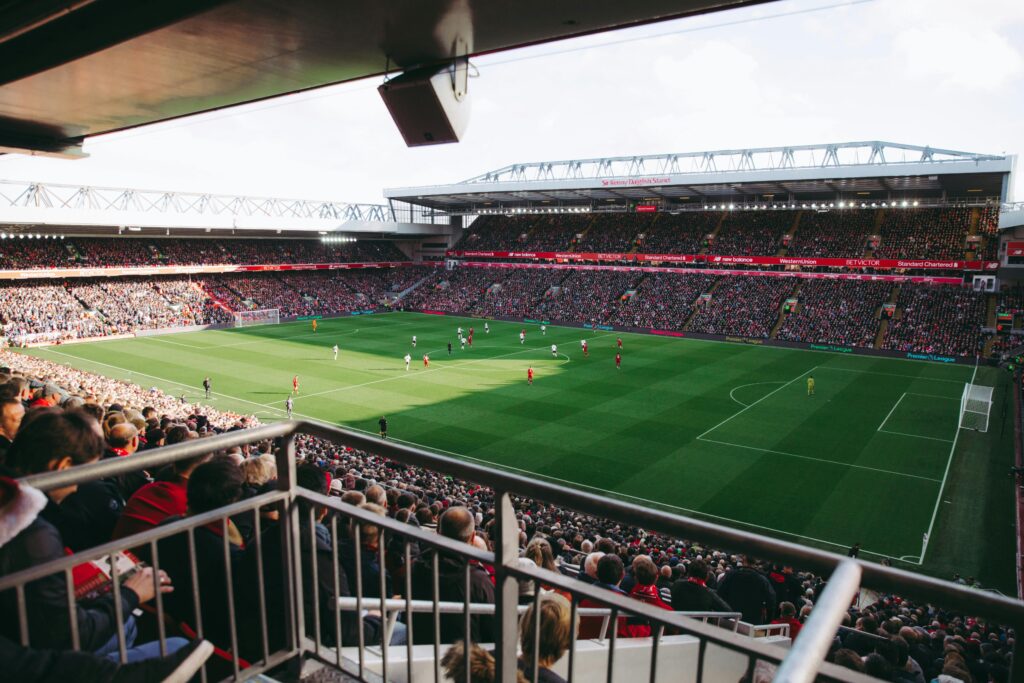
Liverpool have made history as the highest-earning English club for the first time, according to the latest Deloitte Football Money League analysis. The Reds, fresh off their 2024-25 Premier League triumph, generated a staggering €836 million (£702 million) in revenue, surpassing every other English side and cementing their position as one of the world’s football financial powerhouses.
This shift in the English hierarchy comes amid a broader global landscape where Real Madrid continues to lead the pack with €1.16 billion (£975 million), despite neither winning La Liga nor the Champions League last season. Barcelona reclaimed a spot in the top three with €975 million (£819 million), while Bayern Munich, Champions League winners Paris Saint-Germain, and Liverpool round out the upper echelons of Europe’s football elite.
Liverpool’s Financial Rise: Beyond the Glory on the Pitch
Winning the Premier League not only delighted fans but also significantly boosted Liverpool’s commercial and matchday revenue streams. Deloitte’s analysis highlights that clubs are increasingly leveraging their stadiums and surrounding facilities on non-matchdays, optimizing sponsorship deals, and expanding merchandising operations. For Liverpool, this means that Anfield’s iconic matchday atmosphere is now matched by boardroom profitability.
Deloitte Sports Business Group lead partner Tim Bridge notes, “Clubs are taking greater ownership of their revenue-generating capabilities. On-pitch performance remains a primary driver for clubs to progress to the upper echelons of the ranking, and Liverpool’s Premier League title has clearly propelled them to the forefront of English football business.”
Manchester United’s Decline and the Changing English Guard
For Manchester United, Deloitte’s 2026 Money League report paints a stark contrast. Once the benchmark for commercial and matchday revenue, the Red Devils have fallen to eighth place with €793 million (£666 million), their lowest position in the 29-year history of the Money League. United’s struggles on the field, finishing 15th in the Premier League and losing the Europa League final to Tottenham, have had tangible financial consequences.
Bridge observes, “A decade or more ago, Manchester United set the benchmark for both commercial income and matchday revenues. That is no longer the case. The landscape has shifted, and clubs like Liverpool and Manchester City are now redefining financial success in English football.”
Other English heavyweights continue to demonstrate their global financial clout. Arsenal generated €822 million (£690 million), Tottenham €673 million (£565 million), and Chelsea €584 million (£491 million). Aston Villa, Newcastle United, and West Ham United also made the top 20, showing that revenue opportunities extend beyond the traditional “Big Six.”
The Global Financial Landscape: Europe’s Heavyweights
While Liverpool lead the Premier League, Real Madrid, Barcelona, and Bayern Munich continue to dominate Europe. Deloitte notes that Real Madrid’s commercial income alone, €594 million (£499 million), would have been enough to place the club in 10th position on the Money League. PSG, bolstered by their Champions League triumph, generated €837 million (£703 million), illustrating the lucrative impact of European success.
Revenue growth across the top 20 clubs reached a record €12.4 billion (£10.4 billion), an 11% increase on the previous year. Matchday revenue grew 16% to €2.4 billion (£2 billion), while broadcast revenue rose 10%, thanks in part to the expanded FIFA Club World Cup held in the United States. Clubs participating in this tournament, including Manchester City and Chelsea, saw a 17% increase in broadcast income.
Balancing Revenue and Player Welfare
The Deloitte report also emphasizes a delicate balance: while clubs continue to maximize revenue through expanded competitions and international exposure, player welfare is a growing concern. The increase in fixtures, both domestically and internationally, has prompted the players’ union FIFPro to take legal action against FIFA over the congested calendar.
Bridge explains, “While these developments present substantial financial opportunities, clubs must balance revenue optimization with protecting the value of the on-field product and safeguarding player health amid ever-increasing fixture schedules.”
What This Means for English Football
Liverpool’s rise to the top of the English financial pyramid signals a new era in Premier League economics. Success on the pitch now directly translates into commercial strength, global brand exposure, and sustainable revenue growth. Meanwhile, traditional giants like Manchester United face the reality that historical prestige alone is no longer enough to dominate the financial landscape.
With six English clubs in the top 10 and record-breaking global revenue figures, Deloitte’s Money League illustrates how the Premier League continues to evolve into a global economic powerhouse, blending athletic excellence with strategic business acumen.
Frequently Asked Questions
What factors contribute most to a football club’s revenue ranking?
Revenue is driven by three main streams: matchday income from ticket sales and hospitality, commercial earnings including sponsorships and merchandising, and broadcast revenue from domestic and international rights. On-pitch success enhances all three areas.
Why has Liverpool overtaken Manchester United financially?
Liverpool’s Premier League win, strategic commercial deals, and enhanced matchday offerings at Anfield have boosted revenue. Meanwhile, Manchester United’s poor on-field performance and lack of European competition participation have contributed to their relative decline.
How do expanded international tournaments affect club revenue?
Events like the FIFA Club World Cup and European competitions increase broadcast revenue and global exposure, enabling clubs to secure higher sponsorship deals and merchandising opportunities, but they also raise concerns about fixture congestion and player fatigue.

Hi, I’m Adam and I cover a mix of football, gaming and general sports stories for GameDayRoundup. I like writing in a way that keeps things simple, direct and enjoyable for everyone, whether you follow the sport every day or just check in now and again. I always try to bring a bit of personality to the articles I work on, along with careful editing to make sure everything is accurate and easy to understand.