
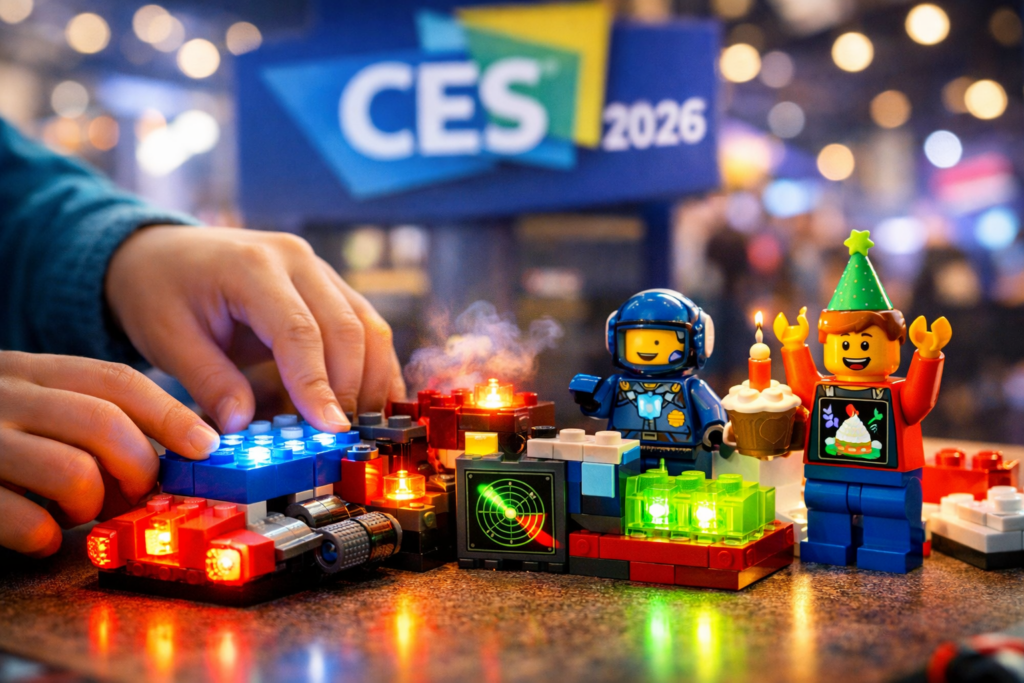
Lego is stepping into a daring new frontier, blending its iconic building blocks with next-generation technology at CES 2026 in Las Vegas. The Danish toy giant unveiled Smart Bricks, a line of bricks embedded with sensors, LEDs, and sound modules that respond dynamically to touch, movement, and proximity. Lego executives describe this as the most significant innovation since the minifigure debuted nearly 50 years ago, but some experts in child development caution that the new tech could influence creativity in ways parents and educators will want to monitor closely.
What Are Lego Smart Bricks?
Smart Bricks are essentially 2×4 building blocks with accelerometers, motion and proximity sensors, LED lights, a miniature sound synthesizer, and a specialized microchip, enabling responsive interactions during play. They form part of the Lego Smart Play system, which also includes Smart Minifigures and Smart Tags that trigger effects based on context. For example, a minifigure can cheer during a birthday scene or a vehicle can emit realistic engine noises.
Tom Donaldson, head of Lego’s Creative Play Lab, explained at CES that the Smart Play system is designed to enhance natural experimentation, encouraging children to build, rebuild, and explore with new layers of surprise. The goal is to amplify creativity without dictating it—a balance Lego believes is essential in today’s tech-driven world.
How Does Smart Play Work?
Smart Bricks interact with each other and with Smart Tags through simple physical actions. Orientation changes, collisions, or proximity triggers can activate visual and auditory effects. A helicopter might flash red lights and emit crash sounds if it falls, or a Smart Tag could add context-specific storytelling cues.
Professor Andrew Manches, a specialist in children and technology at the University of Edinburgh, praised the integration of digital and physical play, calling it “technologically impressive.” However, he emphasized that true imaginative play relies on open-ended creativity, not on pre-scripted responses, a nuance parents should consider before fully embracing the Smart system.
When Will Lego Smart Bricks Be Available?
Lego plans to launch Smart Bricks March 1, 2026, starting with exclusive Star Wars-themed sets. Pre-orders open January 9, 2026, across Lego’s website, stores, and partnered retailers. Expansion into other themes is expected throughout the year to reach a global audience. This rollout aligns with Lego’s strategy to capitalize on CES buzz while giving families early access to its latest innovations.

How Much Will Smart Bricks Cost?
Pricing reflects the premium tech integration. Star Wars sets range from $69.99 for Darth Vader’s TIE Fighter to $159.99 for the Throne Room Duel & A-Wing set. Analysts predict starter packs will sit around $60–$100, while more elaborate collections could exceed $150, reflecting the added value of responsive electronics over traditional bricks. Lego positions these Smart Bricks as both collectible and educational, marrying play with emerging technology for the modern child.
Why Experts Are Concerned
Despite excitement, some experts warn that pre-programmed responses could limit creative freedom. Josh Golin of children’s advocacy group Fairplay emphasized that kids already animate creations using their imagination without electronic prompts.
Professor Manches also flagged potential data privacy issues, urging families to consider how connected toys might introduce vulnerabilities. Lego’s approach, however, uses offline connectivity and encrypted BrickNet technology, reducing the risk compared to app-based smart toys. The debate remains: do Smart Bricks expand play or subtly shape it toward guided experiences?
Why Lego Is Going Digital
Smart Bricks are part of a broader digital strategy. Lego has steadily integrated tech into its products, from augmented reality apps in 2017 to partnerships with Nintendo and Epic Games, including the 2020 Super Mario interactive sets. CEO Niels B. Christiansen emphasizes digital growth as a key pillar for sustaining relevance, while CPO Julia Goldin notes that tech enhances physical play, creating hybrid experiences that bridge the gap between traditional building and interactive gaming.
What This Means for Children and Parents
For families, Smart Bricks present an exciting STEM opportunity, fostering problem-solving, coding skills, and an understanding of electronics—all in a screen-free format. At the same time, parents are encouraged to balance guided digital feedback with unstructured play, ensuring children retain the imaginative independence that Lego has historically nurtured.
Final Thoughts
Lego Smart Bricks represent a revolutionary fusion of tradition and technology, bringing responsive play to a new generation while sparking important conversations about creativity, privacy, and screen-free engagement. As March 2026 approaches, families will soon discover if Smart Bricks enhance imagination or subtly guide it, but one thing is clear: Lego continues to push boundaries, ensuring its iconic brand remains relevant and inspiring for decades to come.
Frequently Asked Questions
Are Lego Smart Bricks Compatible with Existing Sets?
Yes. The Smart Play system integrates seamlessly with the classic Lego System-in-Play, allowing families to mix Smart Bricks with existing collections. Older Star Wars, city, or creator-themed sets can now feature lights, sound, and movement, giving builders endless customization options and extending the lifespan of their current collection.
What Age Group Is Lego Smart Bricks Designed For?
Entry-level sets, such as Luke’s Red Five X-Wing, target children 6 years and older, while more intricate builds, like the Throne Room Duel, are for ages 9+. Lego aligns each set with developmental stages, ensuring younger children enjoy simple interactive fun while older kids tackle complex challenges that foster problem-solving and critical thinking.
How Does Lego Address Privacy and Security With Smart Bricks?
Smart Bricks operate on a closed wireless system called BrickNet and use advanced encryption, ensuring no personal data is collected or transmitted. This screen-free, offline approach minimizes risk compared with app-based alternatives, giving parents peace of mind as their children explore technology-enhanced play safely.
Can Smart Bricks Help Teach STEM Skills?
Absolutely. By combining electronics, sensors, and construction, Smart Bricks provide hands-on experience with physics, coding logic, and engineering principles. They allow children to experiment with cause-and-effect relationships, problem-solve in real-time, and explore technology concepts while still enjoying the tactile satisfaction of building.
Will Smart Bricks Replace Traditional Lego?
Not at all. Lego positions Smart Bricks as a complement, not a replacement. Classic bricks remain central to the Lego experience, while Smart Bricks offer enhanced engagement, providing optional interactivity for builders who want to explore new layers of play.

Hi, I’m Adam and I cover a mix of football, gaming and general sports stories for GameDayRoundup. I like writing in a way that keeps things simple, direct and enjoyable for everyone, whether you follow the sport every day or just check in now and again. I always try to bring a bit of personality to the articles I work on, along with careful editing to make sure everything is accurate and easy to understand.