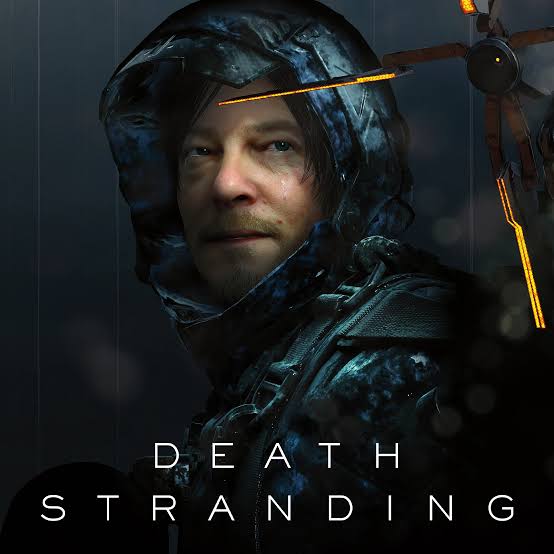
It’s Game Day ladies and gentleman and today I’ll be looking into what makes Hideo Kojima’s Death Stranding so special.
Death Stranding is one of the most unconventional major releases in modern video game history. Developed by Kojima Productions and released initially for PlayStation 4, it deliberately challenges established design norms in AAA gaming. Rather than focusing on combat density or constant stimulation, the game centres on traversal, logistics, and systemic interaction. This design choice is the foundation of what makes Death Stranding distinctive.
Since launch, discussion around the game has often been polarized. Terms like walking simulator, experimental, and auteur-driven are frequently used, sometimes dismissively. A closer examination shows that Death Stranding is neither minimalist nor simplistic. It is systems-heavy, mechanically demanding, and structurally intentional.
Core Gameplay Built Around Traversal Systems
The primary gameplay loop in Death Stranding revolves around delivering cargo across hazardous terrain. Unlike traditional open-world games, movement itself is a mechanical challenge. Weight distribution, balance, stamina, terrain gradient, surface type, and weather conditions all interact dynamically.
Players must actively manage their center of gravity, adjust pace, and plan routes to avoid accidents. Rivers can sweep characters away, slopes can cause uncontrolled slides, and poorly packed cargo can destabilize movement. These mechanics transform traversal into a skill-based system rather than a passive activity.
Over time, the game introduces tools such as ladders, climbing anchors, vehicles, and infrastructure upgrades. Each addition modifies traversal complexity without removing the need for player attention. Fast travel exists but is deliberately limited to preserve the importance of geography and route planning.
Asynchronous Multiplayer and World Persistence
Death Stranding employs an asynchronous online system that allows players to indirectly interact with one another. Structures built by one player can appear in another player’s world, including bridges, generators, shelters, and navigation aids.
This system serves multiple functions. It reduces friction in later stages of the game, incentivizes contribution to shared infrastructure, and creates a persistent sense of global activity without direct player interaction. Importantly, it avoids competitive pressure. There is no direct player-versus-player combat.
Likes, the in-game acknowledgment system, operate as a form of non-verbal feedback. While not mechanically essential, they encourage participation in world-building and subtly reinforce cooperative behavior.
Narrative Structure and Thematic Consistency
The narrative of Death Stranding is complex and heavily layered. It explores concepts such as extinction events, metaphysical boundaries between life and death, and the societal consequences of isolation. These ideas are presented through extended cutscenes, in-game lore, and environmental storytelling.
Rather than distributing narrative evenly throughout gameplay, the story is structured in dense segments. Long periods of minimal exposition are followed by extended cinematic sequences. This pacing reinforces the game’s mechanical rhythm but can feel demanding for players expecting constant narrative reinforcement.
Character backstories are integral to understanding the game’s logic and themes. Performances by Norman Reedus, Mads Mikkelsen, Léa Seydoux, and others ground abstract concepts in identifiable motivations. While dialogue can be verbose, it is consistently aligned with the game’s thematic focus.
Environmental Design and World Logic
The game world is intentionally sparse. Inspired by real-world landscapes, the environments emphasize elevation changes, open visibility, and natural obstacles. There are few traditional landmarks, which encourages players to navigate using terrain recognition rather than map icons.
Timefall rain introduces a systemic environmental hazard that affects both traversal and cargo condition. Weather forecasting mechanics later allow players to plan routes strategically. These systems reinforce the idea that the environment is not static decoration but an active participant in gameplay.
Enemy encounters are comparatively infrequent and situational. Hostile humans and supernatural entities function more as disruptions than focal points, ensuring traversal remains the dominant gameplay priority.
Audio Design and Selective Use of Music
Death Stranding uses sound design with restraint. Ambient noise, footsteps, equipment movement, and weather effects dominate moment-to-moment audio. Music is deployed sparingly, often triggered at specific narrative or geographic moments.
This selective approach prevents audio fatigue and reinforces spatial awareness. Licensed tracks are used as punctuation rather than constant accompaniment, aligning audio design with traversal milestones.
A Deliberate Departure From Industry Norms
Death Stranding intentionally avoids several common AAA conventions. There are limited combat arenas, minimal skill trees focused on damage output, and no competitive multiplayer modes. Progression is tied primarily to efficiency, planning, and infrastructure development.
This design choice narrows the target audience but strengthens identity. Rather than attempting to satisfy all player expectations, the game commits to a specific mechanical and thematic framework.
As a result, Death Stranding is often discussed less in terms of replayability and more in terms of long-term impact. Its systems and structure remain atypical years after release.
Ongoing Relevance and Design Legacy
Death Stranding continues to be referenced in discussions about experimental AAA design and non-traditional open-world mechanics. Its emphasis on logistics, environmental awareness, and indirect cooperation has influenced subsequent titles across multiple genres.
While not universally appealing, its execution demonstrates that large-scale games can succeed without relying on constant action or conventional engagement loops.
Frequently Asked Questions
What type of game is Death Stranding?
Death Stranding is an open-world action game focused on traversal, logistics, and indirect multiplayer rather than traditional combat-heavy gameplay.
Does Death Stranding have multiplayer?
Yes. It features asynchronous multiplayer where players share structures and tools without direct interaction.
Is Death Stranding mechanically complex?
Yes. Movement, cargo management, terrain, weather, and infrastructure systems interact in ways that require planning and adaptation.

Hi, I’m Jacob. I write and edit for GameDayRoundup with a focus on football news, gaming culture and the growing world of esports. I enjoy breaking down big stories into something that feels approachable and fun to read. I’m always looking for new topics, new angles and new ways to keep our readers informed without overcomplicating anything. Writing for this site lets me share the things I follow every day and I love being part of the team.