
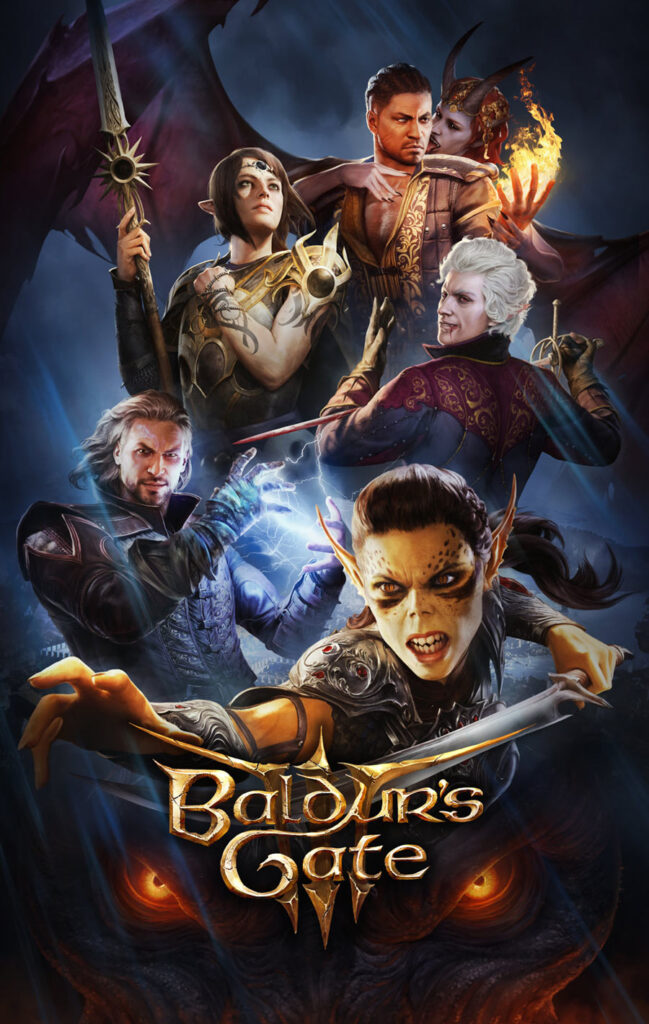
It’s gameday ladies and gentlemen, and it’s time to cover one of my all-time favourite games. Man, this game is good. Spoiler alert, but this will no doubt be getting a high rating. We’ll be diving into the plot, the gameplay, graphics and everything else to do with Baldur’s Gate 3 as I give you my opinion on whether this game is worth buying. Let’s go.
Plot and Story — a Dark Gift and Hard Choices
You are immediately thrown into the action. From the moment you wake, parasite in brain, aboard a burning spaceship flying through the first layer of hell, Baldur’s Gate 3 doesn’t waste time. You’re thrust into a harrowing journey: attacked by mind-flayers, infected with a parasite that threatens to transform you into one of them. You’re cast into the wilderness, and given one simple task; Remove the parasite. This simple premise carries you through almost the entire game, and is key to the plot. Will you take advantage of the powers it can provide? Or will you resist the temptation of these powers and choose to fight off the minions of the Cult of the Absolute.
The narrative arcs across sprawling landscapes: haunted forests, shadowy caverns of the Underdark, and eventually the teeming, morally tangled city of Baldur’s Gate itself. The game invites you into the world of Dungeon & Dragons to shape the world with your decisions: who you trust, who you betray, who you save — or doom. Companions become more than side characters: they are living, breathing souls whose stories interweave with yours. Relationships are fragile, often shifting with a single decision. Loyalty and betrayal carry weight. Love, rage, hope — all feel earned.
What struck me most was how Baldur’s Gate 3 doesn’t treat your journey as binary good versus evil. There are no neat moral boxes. The parasite is a curse, yet also a source of power. Trust can be salvation or folly. In my playthroughs, I agonised, laughed, mourned, and sometimes recoiled in horror — and always felt the gravity of choice. It’s a story that doesn’t just happen to you. You shape it, and on different playthroughs, you can shape it in different ways which result in completely different stories throughout.
Gameplay — Old-school RPG Soul, Modern Freedom
The gameplay of Baldur’s Gate 3 is a rich tapestry weaving classical tabletop RPG DNA with modern flexibility. Rooted in the mechanics of Dungeons & Dragons (5e), it gives you the freedom to craft your identity — with races, classes, subclasses and backgrounds — or pick one of the hand-crafted “Origin” heroes whose personal stories offer compelling hooks. It takes the popularity of Dungeons & Dragons, and simplifies it through gameplay. Cutting out the sometimes arduous nature of tabletop RPGs, it allows you to explore the world in digital form, which will no doubt be a great way for people to experience this world.
Combat flows between real-time exploration and turn-based tactical encounters. When conflicts erupt, the game switches to turn-based mode: you and your party take turns, dice rolls determine hits or misses, and every spell, potion or sword swing feels full of possibility. Strategy, positioning, resource management — everything matters. You can complete each encounter either through discourse or combat. Sometimes you can sneak past. I find the best way to play this game is to try something new every time. Hell, if you like you can take out one of the goblins in the first areas. Put them in your inventory and then throw their bodies at other enemies at the end of the game. If anything, you really should do that, because it’s hilarious. But the real magic lies in freedom. Exploration isn’t just “go here, kill that.” You can climb, jump, shove enemies off cliffs, sneak past guards, talk to animals (yes, even corpses in some cases), and approach problems with creativity. Quests and gameplay rarely feel linear: the world reacts to your actions, and no two playthroughs need to play out the same. It feels alive.
Playing solo or in co-op works beautifully. Whether you prefer to carry the story alone or share the fate and chaos with friends, BG3 adapts. The ability to split your party, let different players pursue different goals, or synchronise decisions at key moments adds replay flexibility and social magic.
Graphics and Visuals — A World That Breathes
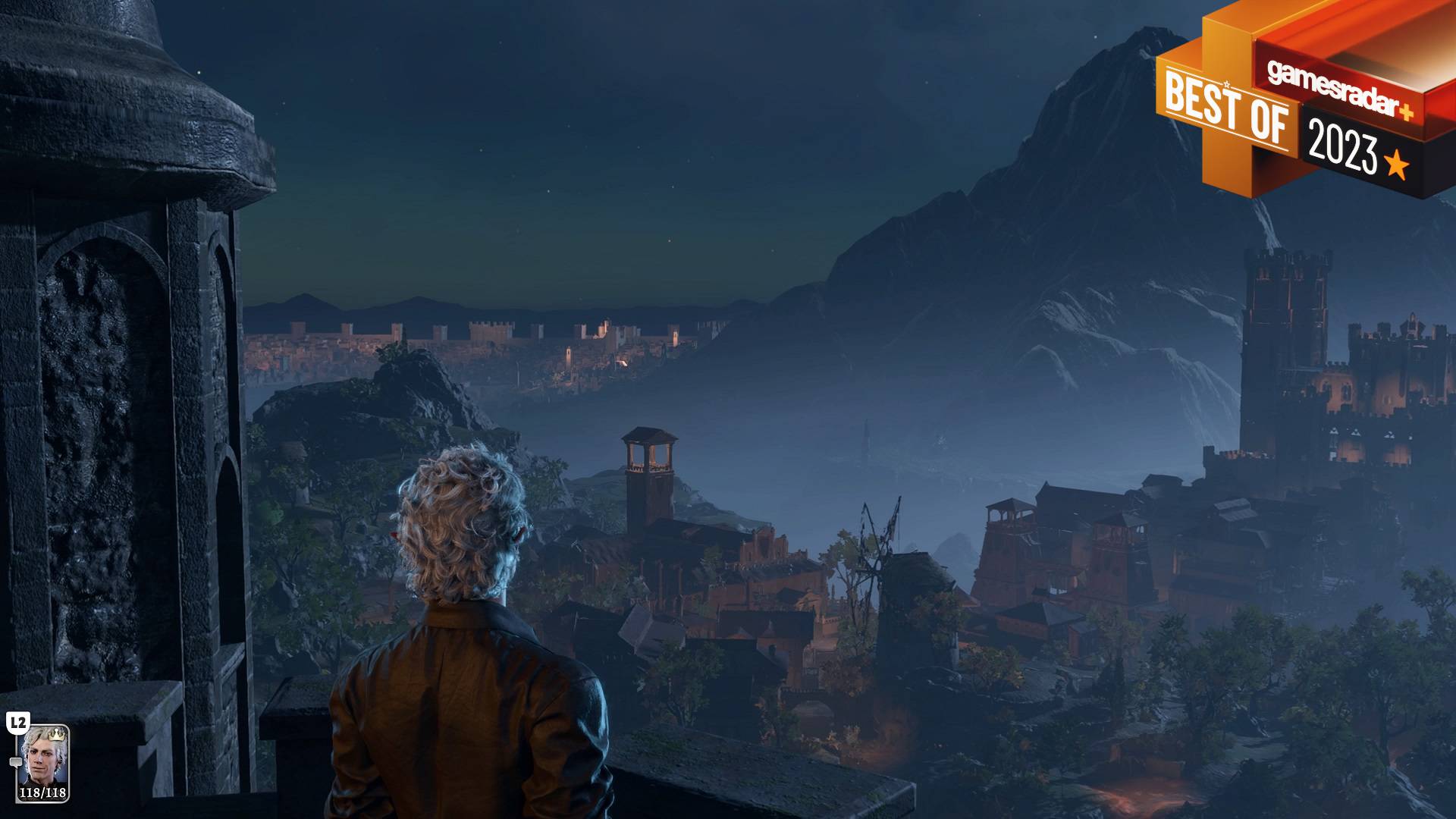
Visually, Baldur’s Gate 3 is a triumph. Character models are detailed, environments rich and atmospheric, from leafy woods to dank caves to the torch-lit streets of the city. Light and shadow play across faces and armor; magical spells crackle with energy; weather elements, flickering fires and ambient details deepened immersion. Many times I found myself just wandering, staring, letting the world breathe.
Audio and music tie it all together. The score — sweeping, haunting, tender — swells to elevate emotional moments; voice acting brings characters to life in a way that’s hard to forget. Even ambient sounds — footsteps on cobblestones, creaking wood, whispering winds — contributed to a sense of presence that many games strive for but few achieve.
On modern PCs and consoles, with recommended settings, the game runs smoothly, delivering cinematic moments and seamless exploration. On lower-end rigs or handheld devices, compromises may be necessary, but the art direction still shines. It’s a world built with love, and it shows.
Accessibility — A Mixed Bag, but A Step Forward
For all its grandeur, Baldur’s Gate 3 doesn’t ignore accessibility altogether. The developers built in remappable controls, subtitle options, adjustable subtitle size and background, and input customisation to accommodate different play styles. Importantly, because combat can be resolved in turn-based mode, players don’t need fast reflexes or precise timing. That lowers barriers for those who struggle with fine-motor skills.
That said, some shortcomings remain. The complexity of menus and systems can feel overwhelming for newcomers. Some players have reported small text or UI scaling issues, particularly in handheld or lower-resolution contexts. There have also been critiques noting the lack of deeper accessibility features — for example, more robust colour-blind support or fully customisable UI layouts. The developers have expressed openness to feedback, and some patches have improved things.
In short: BG3 is more accessible than many classic CRPGs, especially for physical or reaction-time limitations. But there’s room for growth if it hopes to welcome everyone.
Awards and Recognition — A Historic Sweep
Baldur’s Gate 3 has not just been praised. It has been showered in honours — arguably more than any RPG in recent memory. By 2024, it became the first game to win Game-of-the-Year (or equivalent) across all five major award ceremonies: The Game Awards, Golden Joystick Awards, D.I.C.E. Awards, Game Developers Choice Awards, and BAFTA Games Awards.
At The Game Awards 2023 alone, it swept six wins, including Best Game, Best RPG, Best Multiplayer, Best Community Support, Player’s Voice (public choice) and Best Performance. At BAFTA 2024 it won five prizes — Best Game, Best Music, Best Narrative, Supporting Performer, plus the public-voted EE Players’ Choice Award. It also won top honours at the Game Developers Choice Awards (Game of the Year, Best Narrative, Best Design, Audience Award) and at the D.I.C.E. Awards (Role-Playing Game of the Year, Outstanding Achievement in Story, Game Design, Game Direction) among others.
Some of the praise might be hype, but the volume of awards reflects more than fanfare — it’s evidence that BG3 succeeded at nearly every level: story, design, technical execution, community engagement.
Replayability and Longevity — Endless Stories, Ever-expanding Worlds
One of the most compelling aspects of Baldur’s Gate 3 is how every choice branch, every companion relationship, and every moral decision can unfold in dramatically different ways. Replayability isn’t a selling point: it’s a foundational design principle. Want to lean into darkness? You can. Try a pure-hearted hero? That’s valid too. Play a charming rogue, a tragic cleric, or a cynical warlock. Each playthrough brings unique dynamics, emotional resonance, and unexpected moments.
Even after “finishing” the main story, many players return: to explore forgotten quests, test alternative choices, romance different companions, or see how the world changes. The breadth of character builds, class choices, and campaign outcomes give BG3 a substantial lifespan. What I appreciate most is that no matter how many times I go back, the world still surprises me. Old friends betray you. New threats emerge. Secrets remain hidden. It feels alive.
Thanks to continued support and community creativity — mods, patches, cross-platform updates — the game remains relevant. As of 2025, the developer continues to engage with fans and roll out meaningful updates that refine performance and gameplay.
Final Thoughts — A Masterpiece With a Heart, But Not Perfection
Baldur’s Gate 3 is more than a game. It is a living storybook where your choices etch permanent marks. For me, it hit a rare sweet spot: epic in scale yet intimate in emotion; strategic in mechanics yet personal in consequence; familiar in RPG roots yet boldly adventurous in freedom and imagination. It quickly became one of those rare games that sticks with you — long after you stop playing.
Yes, the learning curve can be steep. Yes, accessibility could stand to improve. And yes, graphical performance depends on hardware. But the emotional breadth, the freedom of choice, and the sheer magnitude of what BG3 allows you to do — that makes it worth every minute. If you crave a role-playing experience where you both follow and forge your own destiny, this is one of the finest modern RPGs I have played.
Can This Game Still Capture You? Absolutely.
Whether you play once or a dozen times, whether you rush to the end or wander aimlessly through side-quests and hidden caves, Baldur’s Gate 3 welcomes you like a world of possibility. It doesn’t just ask you to play — it asks you to become.
Editor’s Verdict: 5/5
Frequently Asked Questions
Is Baldur’s Gate 3 playable solo only, or does it support co-op multiplayer?
Yes — Baldur’s Gate 3 supports both solo play and multiplayer co-op (online or local), letting up to four players team up and make shared choices.
Do my choices and character class significantly change the story or outcome?
Absolutely. The game is built around choice and consequence. Your race, class, moral decisions, and companion interactions all influence how quests unfold, relationships evolve, and endings play out — meaning each playthrough can feel unique.
Can players with limited reaction time or accessibility needs still enjoy Baldur’s Gate 3?
Yes. The combat system allows switching to turn-based mode, which reduces reliance on reflexes. The game also offers remappable controls and subtitle options for accessibility. That said, some advanced accessibility features (like robust UI scaling or full colour-blind support) remain limited.

Hi, I’m Jacob. I write and edit for GameDayRoundup with a focus on football news, gaming culture and the growing world of esports. I enjoy breaking down big stories into something that feels approachable and fun to read. I’m always looking for new topics, new angles and new ways to keep our readers informed without overcomplicating anything. Writing for this site lets me share the things I follow every day and I love being part of the team.